The Secret to Authentic 90s AI Photography
Welcome to the Promptgalary deep-dive on vintage aesthetics. Nailing that perfect 1990s aesthetic requires significantly more effort than just adding the word "retro" to your Midjourney, DALL-E, or Stable Diffusion prompt. Modern AI image generators are fundamentally biased toward perfection. They are trained to give you perfect studio lighting, flawless skin, and impeccable composition. To trick the eye into believing an image was taken at a late-night party in 1996, we must actively force the AI to mimic the limitations and flaws of early camera technology.
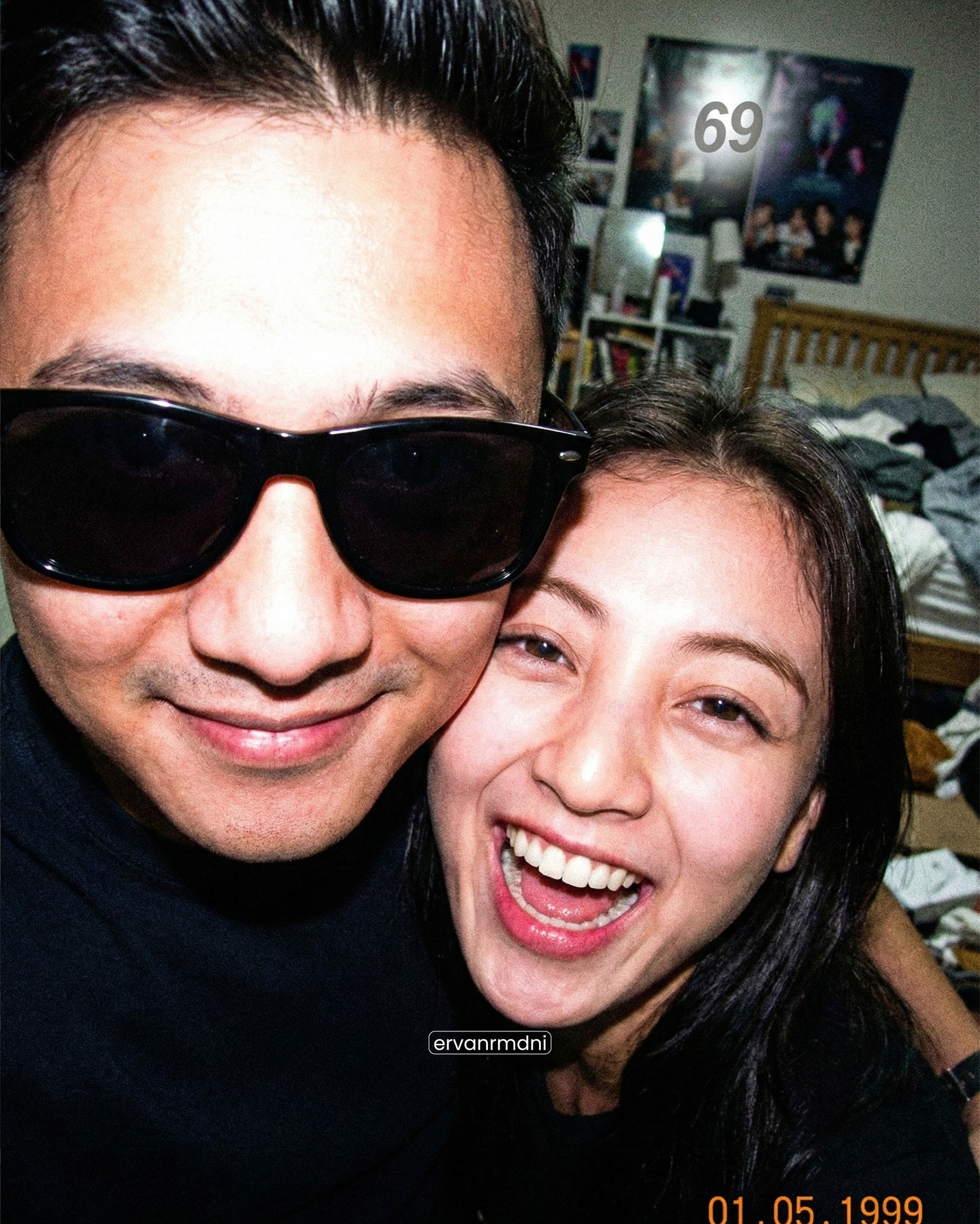
After running thousands of iterations to generate highly stylized and cinematic images of myself, I discovered that true realism lies in the hardware descriptions. We aren't just describing the scene; we are describing the camera that captured the scene.
The Anatomy of a Vintage Camera Prompt
To consistently get high-quality vintage results, your prompts need to include four crucial pillars:
- The Hardware Injection: Stop saying "old photo." Start saying "Sony Cyber-shot," "Canon PowerShot A400," "35mm point-and-shoot," or "Kodak disposable camera." This triggers the AI's learned data regarding the specific color profiles of those sensors.
- The Lighting Constraint: AI loves soft, diffused light. You must destroy that by demanding "hard direct on-camera flash," "flat shadows," and "overexposed highlights." This creates that iconic deer-in-the-headlights look of 90s party photos.
- The Texture & Degradation: You need to introduce visual noise. Keywords like "high contrast JPEG," "CCD sensor look," "heavy film grain," and "color saturation shifts" are non-negotiable.
- The Anti-Perfection Negative Prompts: Just as important as what you want is what you don't want. Instruct the AI to avoid "studio lighting, smooth skin, magazine editorial style, HDR, and perfect symmetry."
Variables in Action: Customizing Your Aesthetic
The true power of these prompts is their modularity. Let's say you want to move away from the standard 90s grunge look. By keeping the camera parameters identical but changing the subject's styling, you can create entirely different vibes.
For instance, swapping a "faded flannel" out for "oversized modern Korean streetwear" completely shifts the demographic while retaining the raw, candid film aesthetic. Or, if you are generating a cohesive brand lookbook for an apparel line like Brainloom, maintaining consistent vintage camera keywords ensures all your promotional shots feel unified and authentic, even if you are generating cinematic self-portraits featuring vastly different outfits across multiple locations.
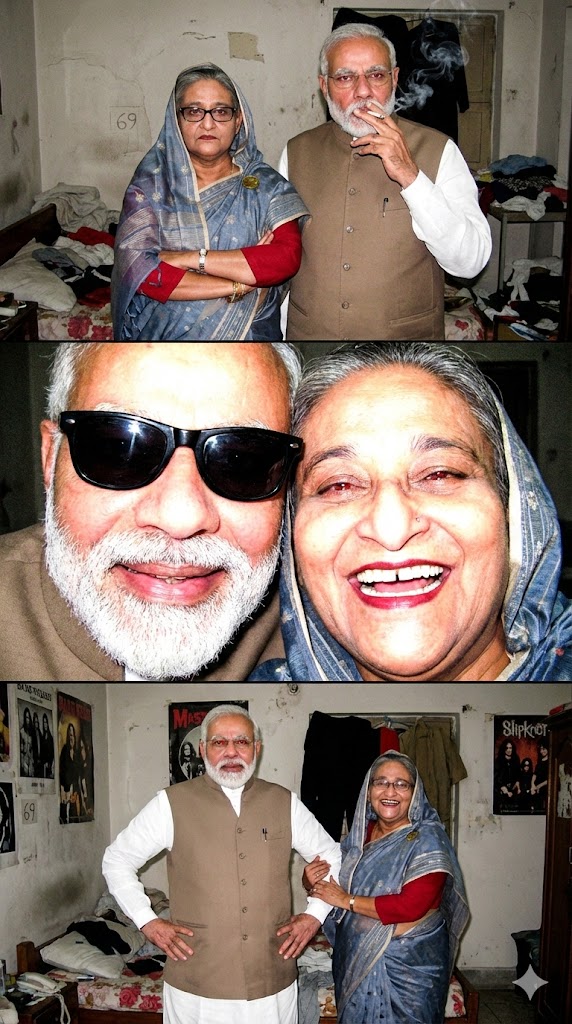
90s Digital Camera Split Screen Prompt for Character Consistency
Why this works: This complex prompt is a masterclass in layout control. By demanding a "vertical split-screen composition" and forcing the AI to render the exact same face in wide, macro, and full-body shots, it creates a cohesive character study that looks like a printed photo strip. Notice the specific inclusion of "Sony Cyber-shot" and "CCD sensor look"—this forces the AI to abandon modern rendering in favor of the slightly crunchy, over-sharpened JPEG aesthetic of early 2000s tech.
Use the reference photo as the face guide. The face must remain 100 percent identical to the reference. Do not change facial structure, proportions, base expression, or any facial details.
Vertical split screen composition. Three images stacked vertically from top to bottom. Seamless edge to edge layout. No borders. No padding. Aspect ratio 9:16.
Top panel. Wide shot. Female subject and male subject posing like runway models. Wearing the exact same outfits as in the uploaded photo. The female subject crosses her arms with a stoic expression. The male subject is smoking, with visible smoke coming out. Cool fit vibe. Hard direct on camera flash. Red eye effect visible. In the background, there is a small detail of the number 69 naturally blended into the scene, such as within wall texture or room objects. Subtle and not noticeable.
Middle panel. Extreme close up macro mode selfie. The male subject wears black sunglasses with a slight smile. The female subject laughs excitedly. Noses appear distorted. Goofy expressions. Heads pressed together. Forehead appears overexposed due to flash. The number 69 is subtly hidden within light reflections or digital noise. Difficult to notice.
Bottom panel. Full body shot. The male subject stands casually with both hands on his hips. The female subject stands beside him, holding the male subject's arm with both hands in an affectionate and excited way. Posters of well known bands are attached to the wall and appear worn. One of the posters includes a small number 69 as part of its design. Feels natural. Chaotic and playful atmosphere.
Visual specifications. Sony Cyber shot and Canon PowerShot A400 aesthetic. CCD sensor look. Early 1990s digital camera style. Direct on camera flash. Harsh shadows. Low resolution. Visible digital noise. High contrast JPEG. Oversharpened look. Slightly red skin tones. Blooming highlights. Messy bedroom background. Trashy Y2K vibe.
Avoid semi realism. Avoid CGI and 3D render. Avoid smooth skin and beauty filters. No doll like or plastic appearance. Avoid perfect symmetry. Do not use studio lighting or magazine editorial style. No retouching. Avoid soft glam. No perfect skin. Not stock photography. Avoid hyper realistic style, digital art, HDR, or render engines. Avoid bad anatomy. No extra fingers or fused limbs. No floating objects. No facial distortion that alters identity. Avoid overly clean composition.
Do not use black or white bars. No borders, panel lines, grid lines, or comic style separators.
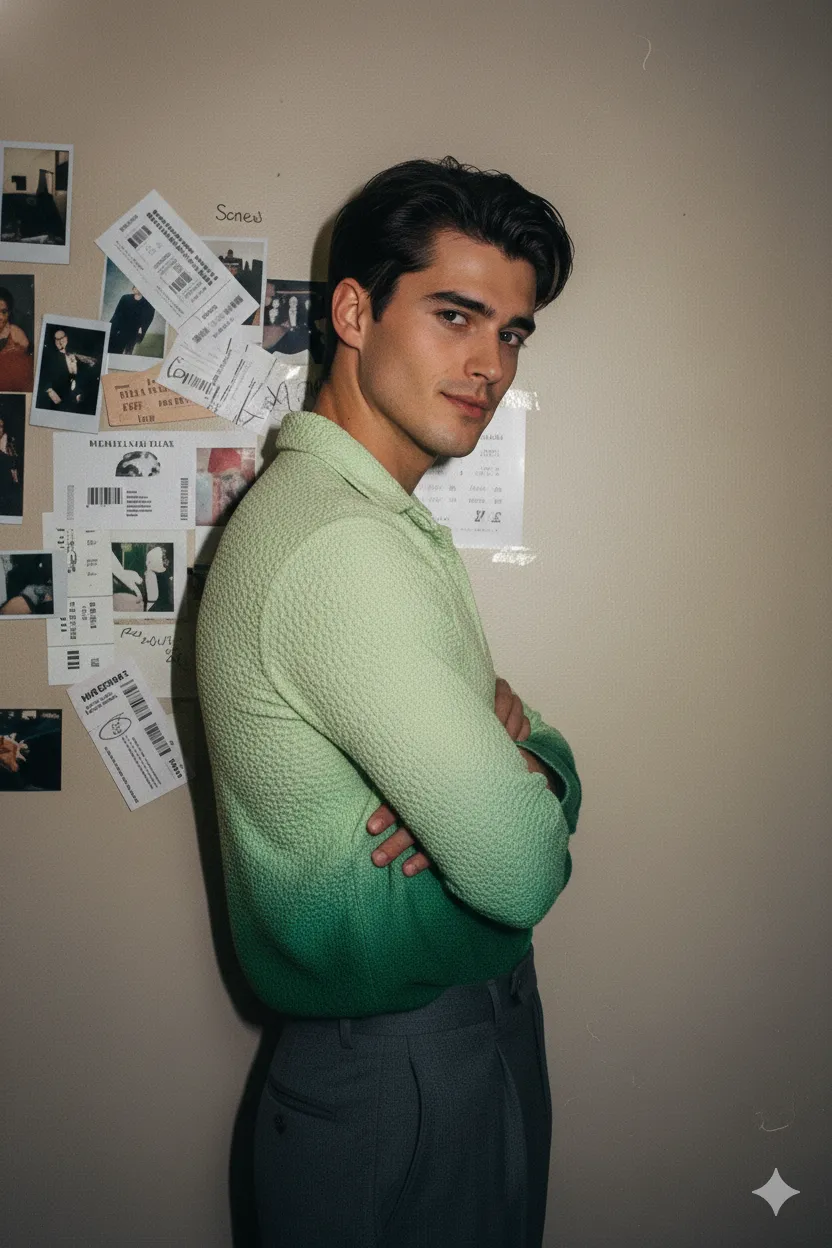
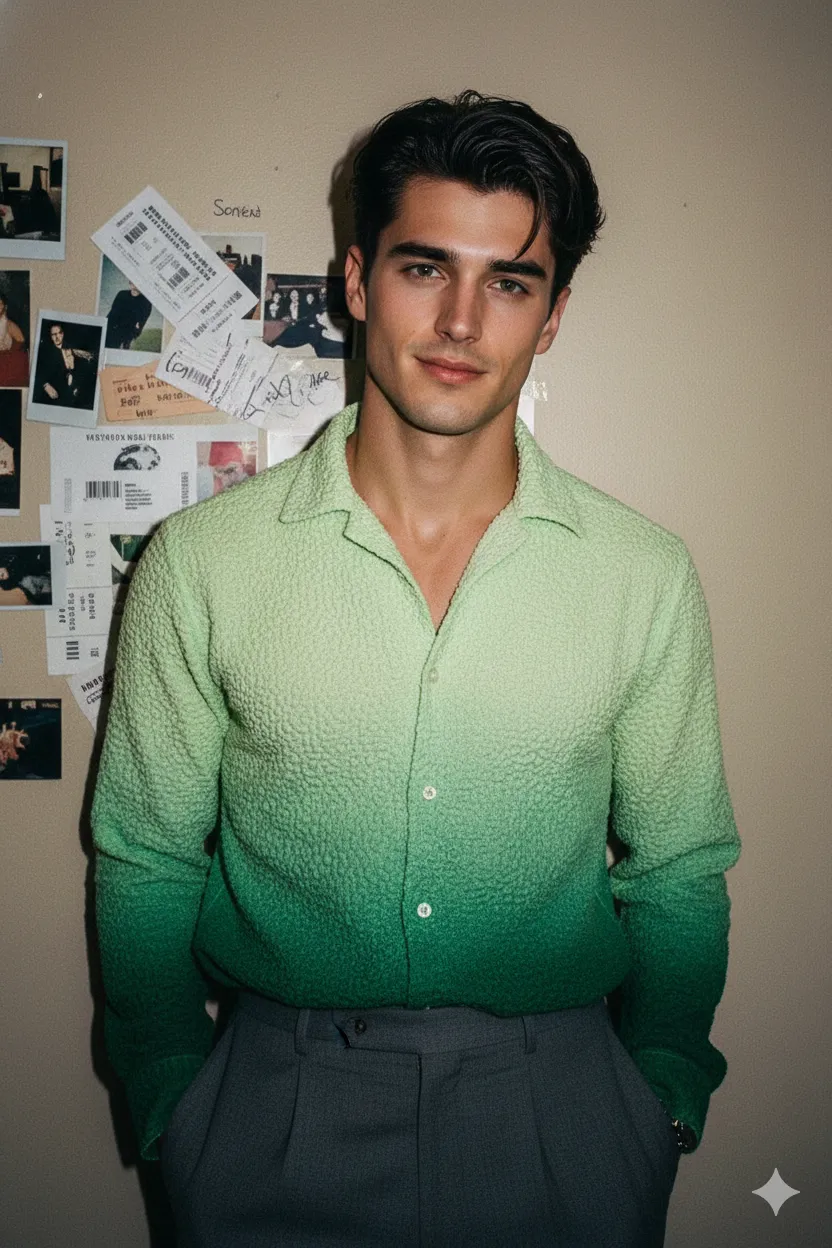
90s Disposable Camera Portrait AI Prompt for Realistic Young Adults
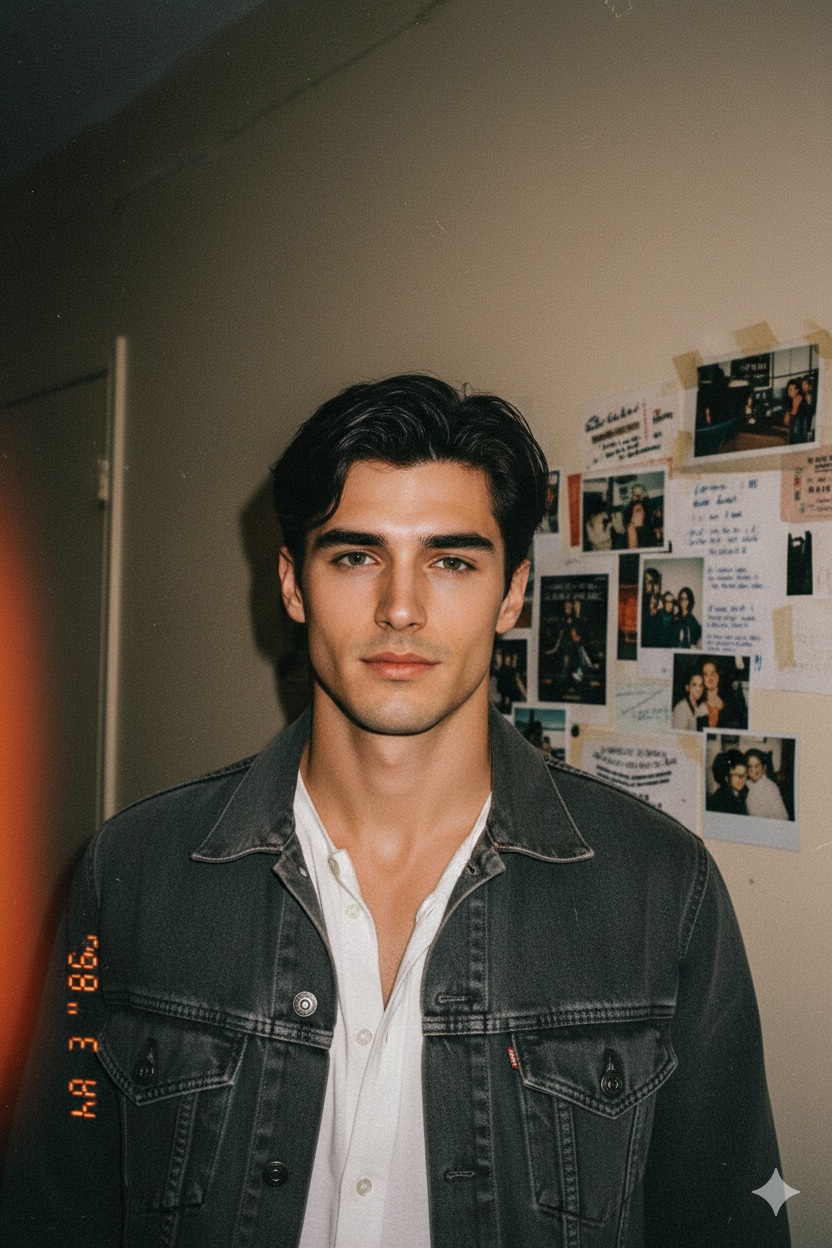
Why this works: Environmental storytelling is key here. By instructing the AI to generate a "dim beige wall cluttered with polaroids," we force the model away from creating an unnatural studio backdrop. The phrase "quiet, late-night realism" dictates the mood, while combining a modern hairstyle with an outdated "popcorn style gradient" shirt creates a fascinating blend of contemporary subjects captured through retro lenses.
Relastic [ young men/women] }with the same unchanged face, pale soft complexion, caught in a classic 90s disposable-camera snapshot. His modern hairstyle. he gives a subtle smirk, relaxed and unbothered. he's wearing a popcorn style gradient light green and dark green combined shirt with trouser paint. The background is a dim beige wall cluttered with polaroids, doodles, and taped-up concert tickets, barely visible. The harsh on-camera flash creates flat shadows and quiet, late-night realism. Same
90s Disposable Camera Snapshot AI Photo Prompt
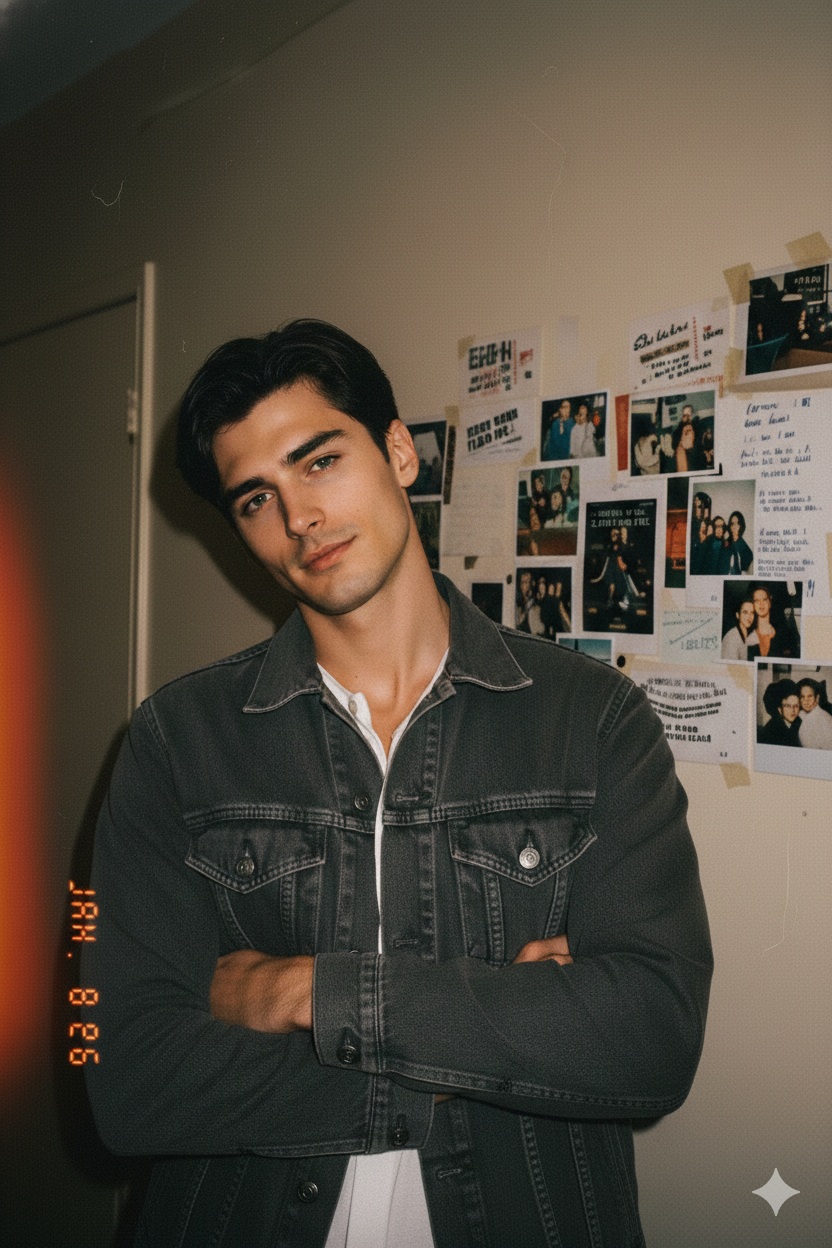
Why this works: This prompt intentionally breaks the rules of good photography. By asking for "awkward framing" and a "raw 90s flash snapshot," we tell the AI to abandon the rule of thirds. This is excellent for creating authentic-looking reference sheets where the subject needs to look entirely unposed. The texture of the "charcoal denim jacket" contrasting against the "harsh light" creates deep, believable shadows.
A raw 90s flash snapshot of me standing still, same unchanged face, relaxed and unbothered. Loose same hair, same skin reflecting harsh light. me wearing a charcoal denhim jacketr. Background: dim beige wall layered with old photos, scribbles, and concert tickets, barely visible. Disposable camera grain, awkward framing, quiet midnight atmosphere. do according to gender , aspect ratio 9:16
90s Grunge Disposable Camera Portrait AI Prompt
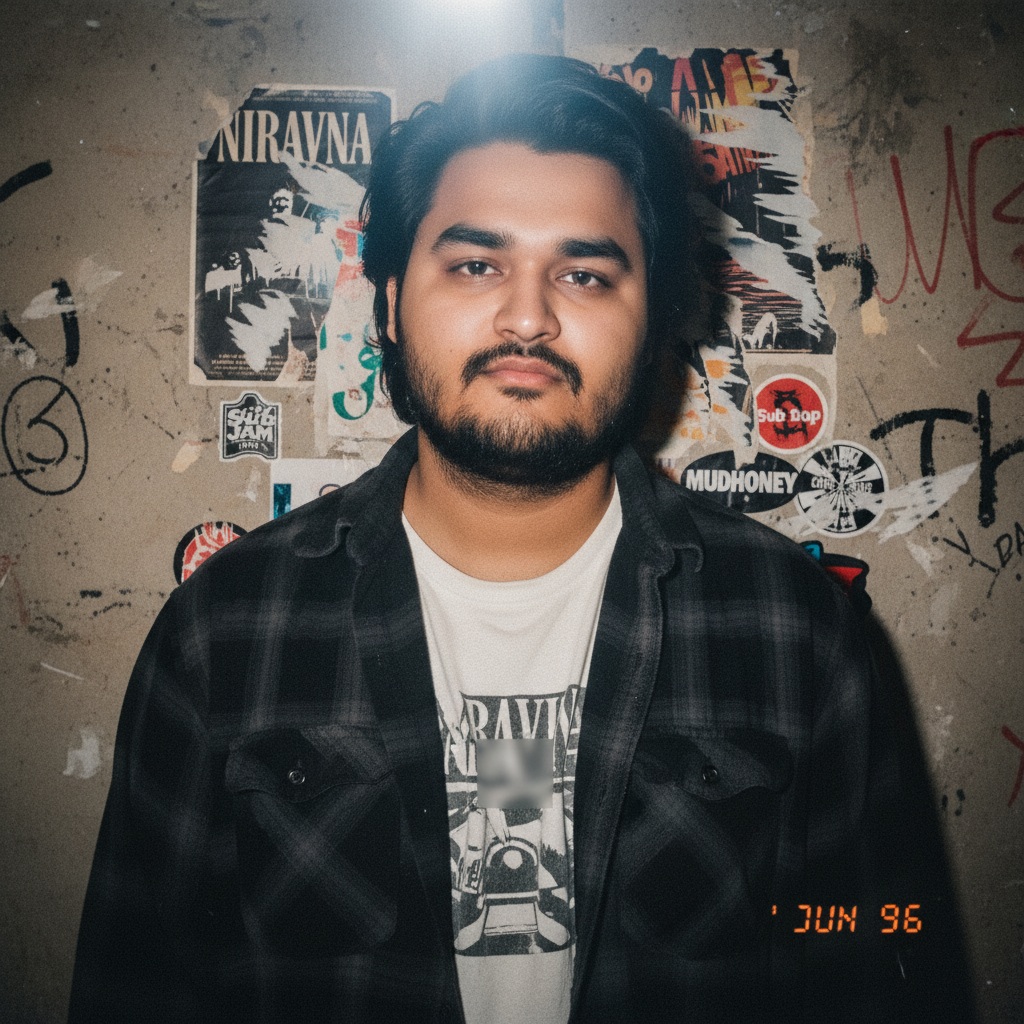
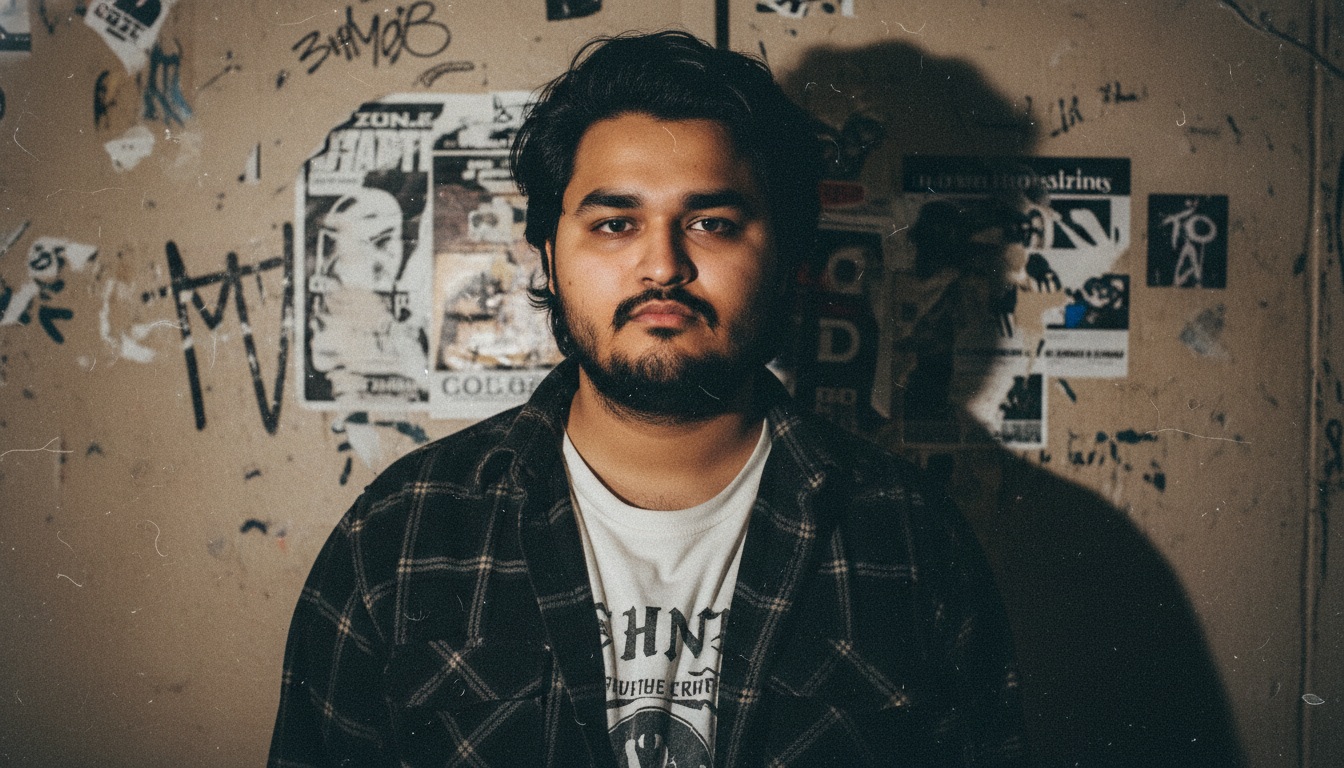
Why this works: To capture the underground scene, you have to control the emotion as much as the lighting. AI defaults to smiling faces. The explicit instruction to maintain a "detached, almost bored" expression is critical here. When combined with "heavy grain," "faded black flannel," and a background of "random marker tags," the output feels like a lost photo from a Seattle basement show in 1994.
me with exact same facial and physical appearance from the uploaded image with the same unchanged face and pale soft complexion, captured in a gritty 90s disposable-camera snapshot. my hairstyle & facial structure remain same as reference image i wears an oversized faded black flannel over a white graphic tee, slightly wrinkled. Expression is detached, almost bored. The background is a rough beige wall with ripped posters, band stickers, and random marker tags. Harsh flash creates strong shadows, heavy grain and raw underground grunge realism. do according to my gender . aspect ratio 9:16
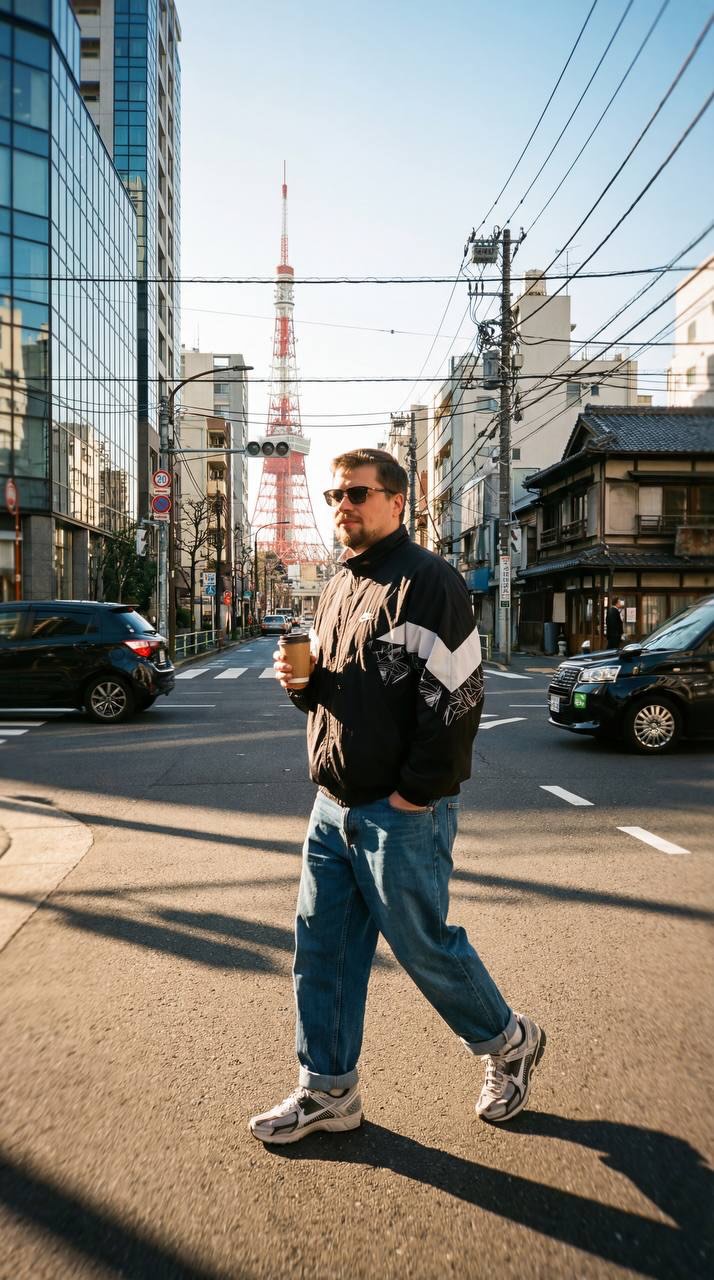
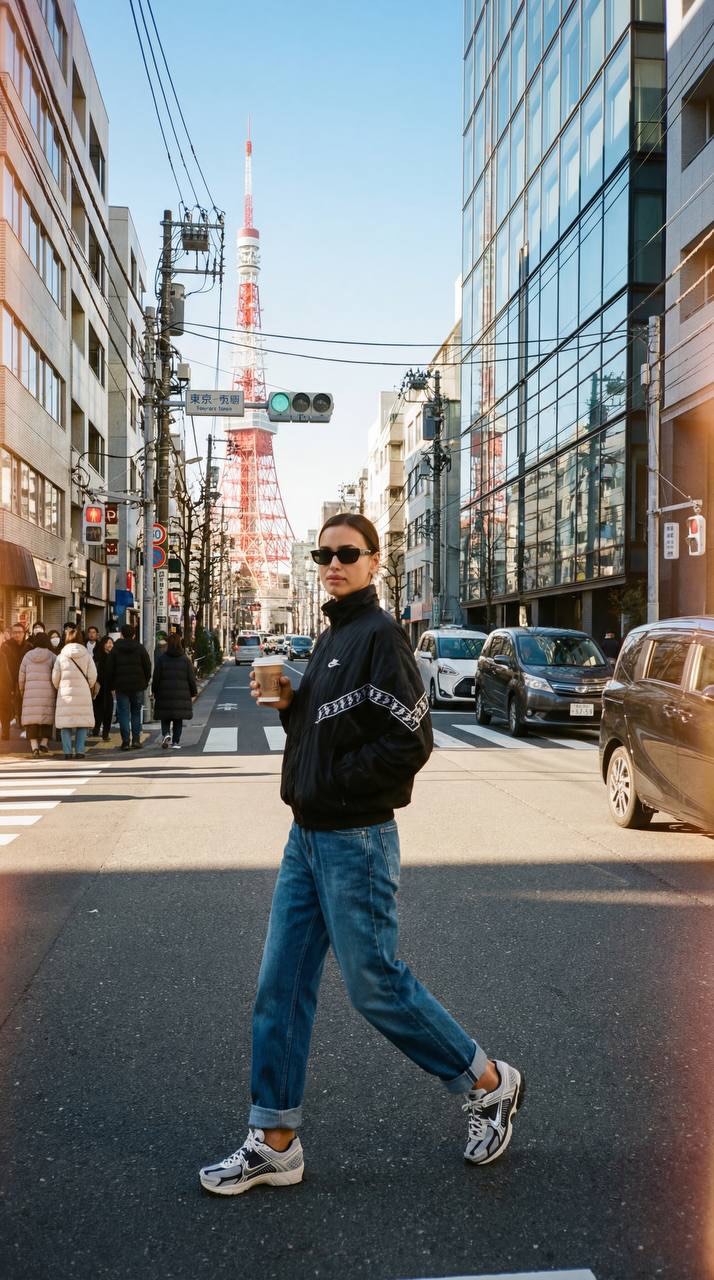
Tokyo Street Style Photo with Vintage Film Aesthetic
Why this works: This prompt successfully bridges the gap between high-end modern photography and vintage filtering. It explicitly calls for a "Sony A7R with a 50mm f1.4 lens" to ensure the underlying structure and depth-of-field are hyper-realistic. But it then overlays a "disposable film camera flash" and "subtle film-style grain" to degrade the perfect digital image, resulting in a casual, yet beautifully composed urban snapshot.
Ultra-realistic photo using the reference image. A Tokyo street scene on a bright winter day. Tokyo Tower is clearly visible in the background. Warm natural sunlight illuminates the buildings, traffic, and pedestrians. A stylish person is crossing the street wearing sunglasses, loose jeans slightly rolled up at the hem, a retro black windbreaker jacket with white patterns, and Nike Zoom Vomero 5 sneakers, while holding a cup of coffee. Realistic shadows appear on the asphalt and buildings. Sharp reflections are visible on car windows. Overhead power lines and traffic lights are clearly detailed. The architecture blends modern glass buildings with traditional Japanese elements. Sharp focus. Shot on a Sony A7R with a 50mm f1.4 lens. ISO 100. Shutter speed 1/500 second. Natural daylight white balance. Minimal post-processing. Cinematic framing. Depicts everyday Japanese urban life. Vivid colors. High realism. Aspect ratio 4:5. Preserve the original composition without changes. Apply disposable film camera flash. Create a soft halo on highlights with warm undertones. Add subtle blur and film-style grain. Casual vintage party photo vibe. ar-9:16
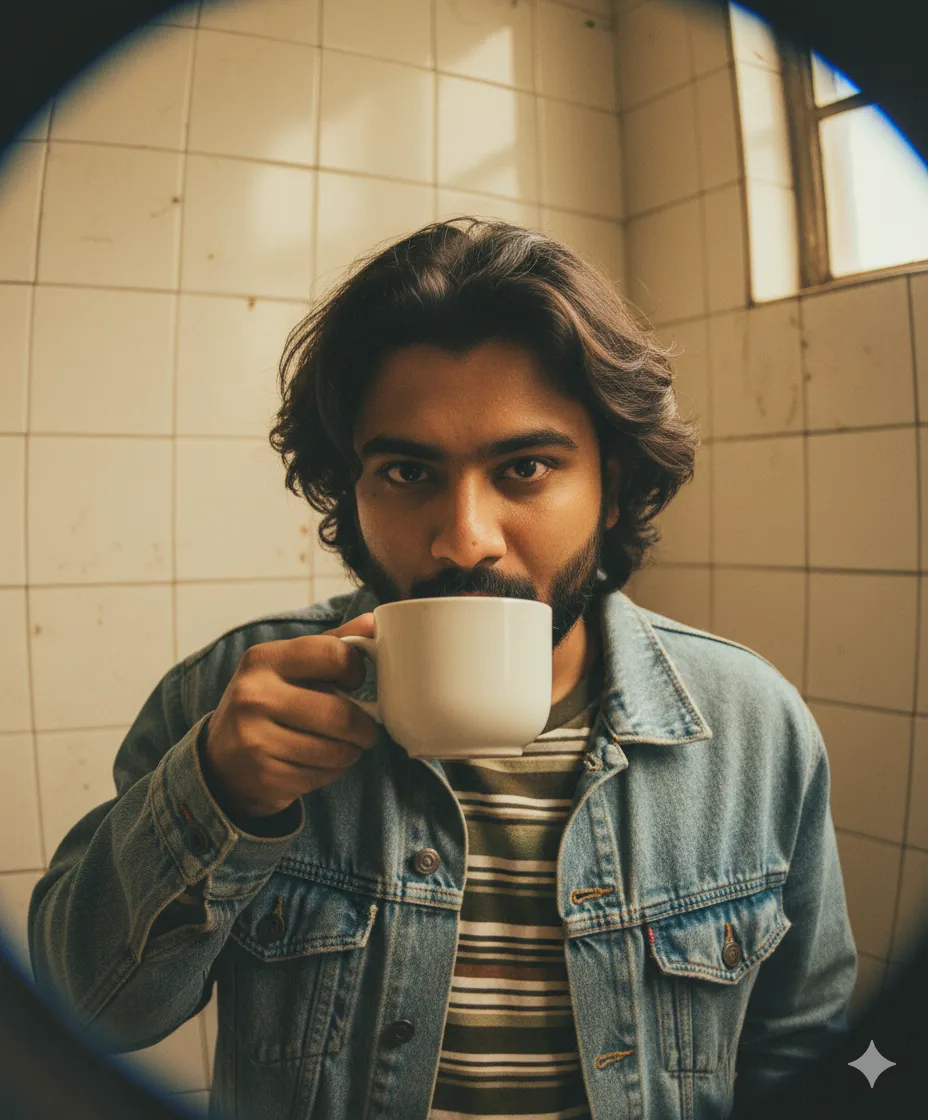
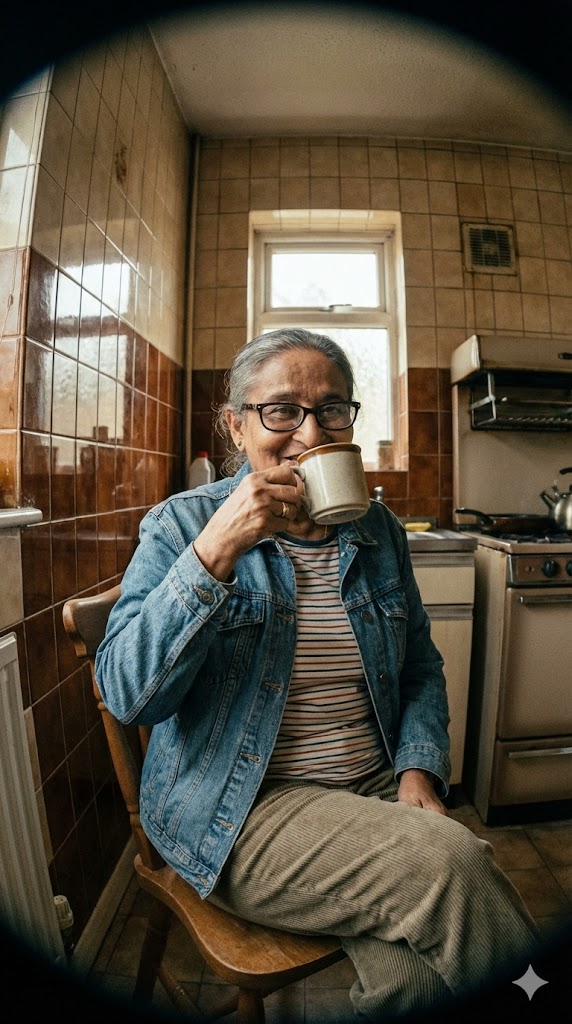
Retro 1990s AI Prompt: Fisheye Lens Effect
Why this works: Fisheye lenses defined 90s skate culture and music video aesthetics. Asking the AI for a "dramatic, wide-angle composition... slightly distorted by the fisheye lens" forces perspective warping that makes the image immediately recognizable as era-appropriate. The addition of "muted, vintage, and slightly desaturated" colors ensures it feels like aging film stock rather than a modern digital filter.
me with exact same facial and physical features from the uploaded image, i drinking from a mug, seated or standing in a casual 1990s-inspired outfit, relaxed and confident pose. The background suggests a slightly aged interior space with glossy tiles and diffused natural light coming from a small window. Dramatic, wide-angle composition emphasizes the subject's presence, slightly distorted by the fisheye lens. Colors are muted, vintage, and slightly desaturated, giving a nostalgic, retro film-like atmosphere. Textures are realistic: ceramic mug, fabrics, natural skin detail. Subtle film grain, warm vintage filter, soft shadows and highlights enhance depth and cinematic mood. High-resolution, sharp focus, enhanced realism and tactile detail using Nano Banana Pro capabilities. 100% use my real face.do according to my gender , aspect ratio 9:16
How to Create a Raw Candid Snapshot with Motion
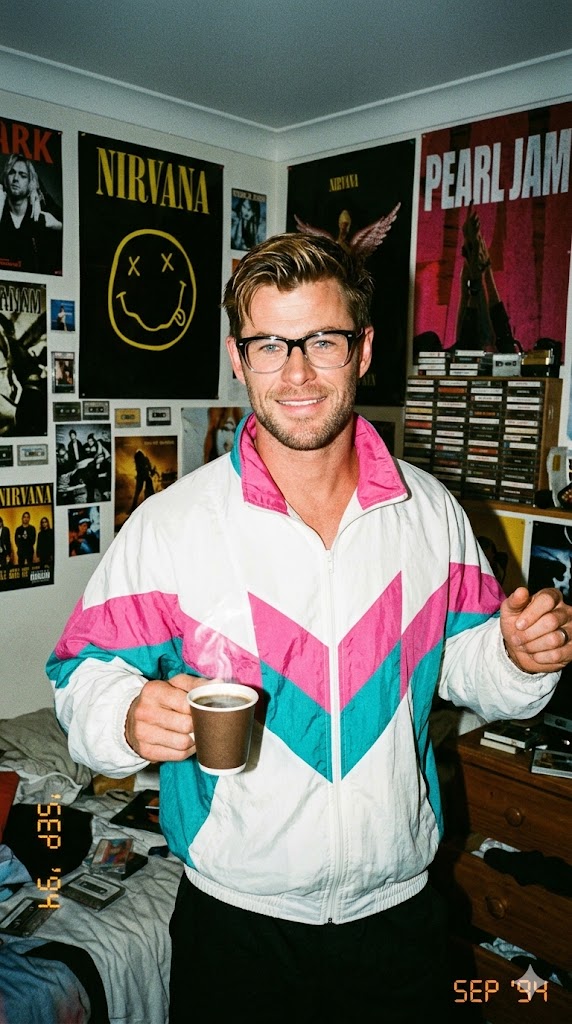
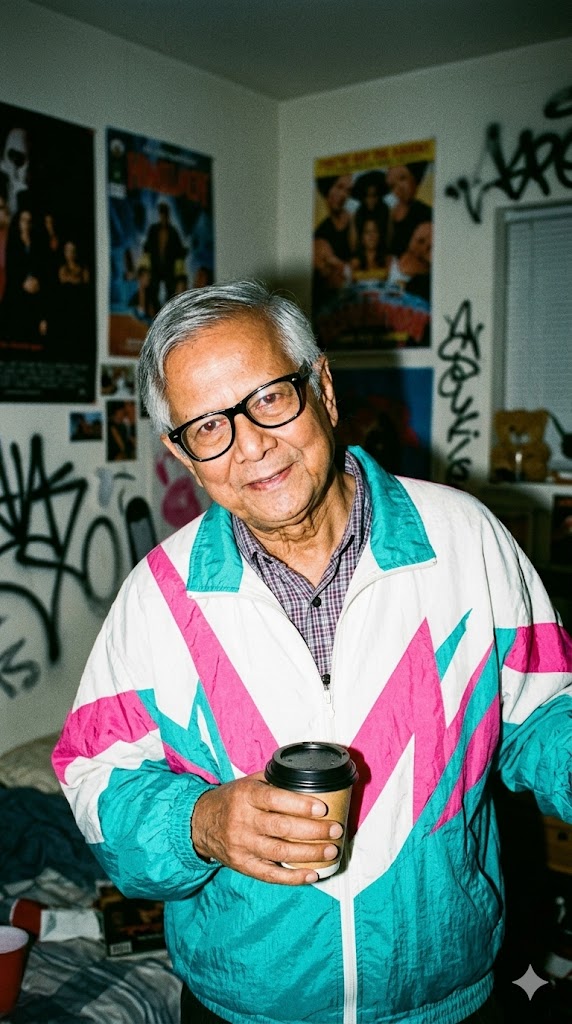
Why this works: Getting an AI to render natural physical movement without warping a reference face is notoriously difficult. This prompt succeeds by highly detailing the action ("grooving to the music," "head slightly tilted with attitude") alongside rigid camera constraints ("Canon Sure Shot," "characteristic color saturation shifts"). It forces the AI to prioritize the authentic, unposed energy of a candid photo while anchoring the light physics to a specific, historical point-and-shoot flash system.
A raw and candid 35mm film photo, looking directly at the camera, capturing the figure from the uploaded reference photo in a spontaneous moment full of 1990s energy. The figure is caught in motion, grooving to the music with their head slightly tilted with attitude, shoulders moving to the rhythm, holding a hot cup of coffee in one hand, and wearing black-framed glasses with clear lenses. They are wearing a striking retro windbreaker jacket with a bold abstract zigzag pattern combining white, pink, and teal green. They are standing in a messy, era-appropriate environment, such as a teenager's bedroom covered in band posters or a city street corner with concrete textures. The photography aesthetic feels like a snapshot from a Canon Sure Shot point-and-shoot camera. The direct on-camera flash is very harsh, creating intensely bright highlights on the nylon material of the windbreaker and the skin, along with sharp, dark shadows directly behind the subject. The vibe feels authentic, gritty, and completely untouched by the social media era. The final image features heavy film grain, characteristic color saturation shifts, and a slight vignette common to consumer film of that decade. Despite the dynamic expression and movement, the original facial structure of the figure in the reference photo remains identical and unchanged. Aspect ratio 9:16
About the Prompts & Methodology
At Promptgalary, we test hundreds of variations before publishing. The prompts provided above are engineered for flexibility, allowing you to substitute specific clothing brands, lighting styles, and facial references while maintaining the core structural integrity of the generated output. Whether you are building an indie mood board or generating high-end reference material, understanding how to command the AI's "camera settings" is the key to mastering your aesthetic.